
Example builds › L&S Excavation › Services › Septic Tank & Drain Field Installation › Dayton
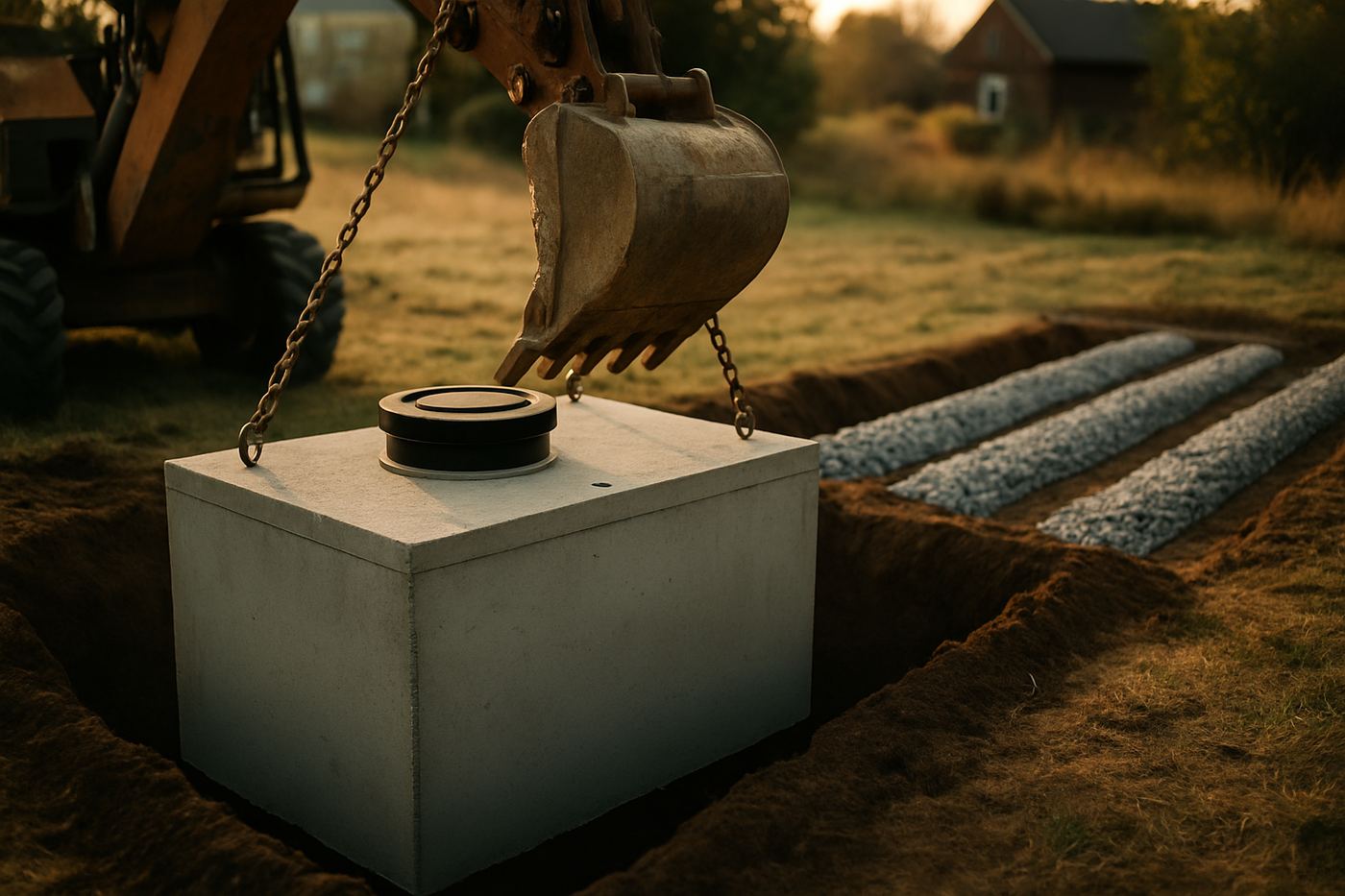
Dayton sits in the Rhea County valley, anchored by the historic Rhea County Courthouse where the 1925 Scopes Trial happened. The valley floor around town runs flat, and the soil holds water hard — which makes septic system design and installation here a genuinely different job than the same work on well-drained ridge soil elsewhere in our service area.
Why Dayton's soil changes the design
A conventional gravity-fed drain field depends on soil that drains at a reasonable rate — that's what the percolation test measures before any system gets approved. Flat valley terrain with heavier, water-holding soil often perks slower, which can push a design toward a larger drain field footprint, a pump system to distribute effluent more evenly, or in tougher cases an alternative design like a mound system. None of that is unusual for this area — it's the standard tradeoff of building on flat, water-retentive valley ground instead of well-drained slope.
What our excavation work covers
Once the perc test and system design are approved through the state health department, our part covers excavating the tank location and setting it to grade, trenching and laying the drain field lines to the design's specified depth and spacing, backfilling with the correct gravel bed, and — this matters more here than in better-draining soil — making sure the field has real positive drainage away from it. A drain field installed without adequate fall in soil that already holds water is setting up for saturation problems down the line. See our septic vs. sewer guide for how the decision between the two gets made in the first place.
Permitting through TDEC
Septic systems in Tennessee are permitted through the state, not the county, and the process starts with the perc test. We coordinate scheduling but the test and design approval run through the state's process — worth building that lead time into your project timeline rather than assuming excavation can start immediately after a design is drawn up.
Free estimate in Dayton.
(228) 355-1539 example build
Frequently asked questions
Why does my lot need a bigger drain field than my neighbor's?
Soil type and perc rate, not lot size, drive drain field sizing. Slower-draining soil — common on Dayton's flat valley ground — often needs a larger field or a pump-assisted design to handle the same amount of effluent that a faster-draining soil could process in a smaller footprint.
How long does the whole process take from perc test to installed system?
Varies with the state's scheduling and design review timeline, which we don't control. Once the design is approved, the excavation and installation itself is usually a shorter piece of the overall timeline than the permitting process.
Can you tell before the perc test whether my soil will be a problem?
Not with certainty, but we can flag likely issues based on what we see during a site walk — standing water after rain, heavy clay near the surface. The perc test is still the official determination.
Related pages
Other service areas
TN
GA